How to Evaluate a Private School Before You Enrol
Key Takeaways
- Evaluate academic quality through class sizes, support structures, and curriculum depth – not just matric results
- Assess school culture through direct observation during visits, not through brochures or marketing material
- Expect facilities and extracurricular breadth to reflect the fee level being charged
- Request a full fee breakdown and treat transparency around costs as a quality indicator in itself
- Watch for red flags: evasiveness, high staff turnover and generic values speak to deeper issues
- The school visit, ideally both an open day and a private tour, is the single most important step in your decision
- Trust what you observe on the day over what you read in advance
After a few open days, private schools can all start to blur together. The same warm welcomes. The same polished brochures. The same carefully selected showcase classrooms. Without a clear framework, it becomes genuinely difficult to separate schools that will serve your child well from those that simply present themselves well.
In this guide, we talk you through how to evaluate a private school and what actually matters. For a broader starting point, our guide to choosing a private school covers the foundational decision. What follows focuses on how to assess quality once you're in the room.
Academic Quality – Beyond the Matric Results
Matric pass rates and top-achiever lists have their place. However, they tell parents very little about how a school performs with a full range of learners. What to look for in a private school academically goes considerably deeper than a headline figure.
During a tour or open day, ask:
- What is the average class size across grades and what is the teacher-to-learner ratio?
- How does the school identify learners who are struggling and at what point does intervention happen?
- What academic support structures exist beyond the classroom?
- Does the curriculum stretch high-achieving learners or does it teach to the middle?
- What does a typical lesson look like and how much learner participation is expected?
A school that answers these questions with specificity and confidence is one that takes learning seriously. Take a look at Abbotts' academic programme to see how a structured approach to individual academic outcomes is built into our model.
School Culture and Values – What to Look and Listen For
Culture is felt before it is understood. No brochure captures it accurately, which is why direct observation matters so much. What are the signs of a good private school in terms of culture? Watch for the details that aren't being staged for your benefit:
- How do staff speak to learners they pass in the corridor?
- How do learners interact with each other when adults are not directly involved?
- Is there a visible sense of belonging and pride in the school?
- Do the values stated on the wall match the behaviour visible in the hallways?
Ask direct questions too: how does the school handle conflict between students? What does the pastoral care structure look like? How are parents kept informed when a learner is struggling emotionally or socially?
Consistency between what a school says and what you observe on the day is itself one of the most reliable private school quality indicators available to you.
Facilities, Resources and Extracurricular Breadth
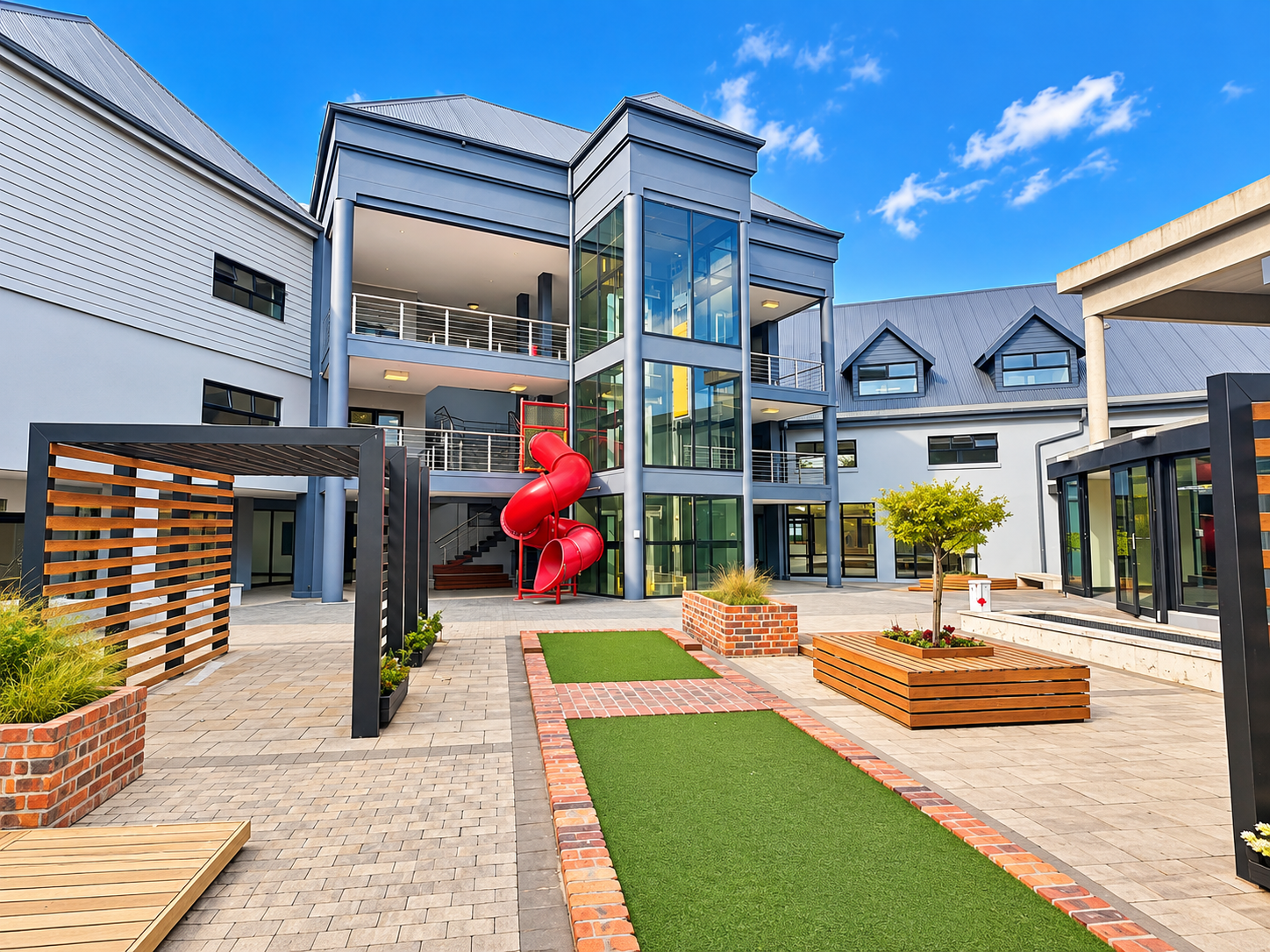
Well-maintained classrooms, a functional library, reliable technology and safe outdoor spaces are reasonable baseline expectations at a private school. How to assess whether a private school is worth the fees partly comes down to whether the physical environment reflects the investment being asked of families.
Beyond infrastructure, examine the extracurricular offering:
- Is there a meaningful range of sport, arts, cultural and leadership programmes?
- Which activities are included in the fees and which carry additional costs?
- Are extracurricular programmes run by dedicated staff or added as an afterthought?
A strong extracurricular programme signals that the school invests in the whole child and not only in academic results.
Fees, Transparency and Value for Money
Private school fees represent a significant financial commitment and parents are entitled to a clear account of what they are paying for. When using a private school evaluation checklist, fee transparency should feature prominently.
Ask for a full fee breakdown, not just the annual headline figure:
- What is included in tuition and what is billed separately?
- Are there compulsory extras such as devices, uniforms, activity levies?
- How are annual fee increases communicated, and with how much notice?
A school confident in its own value will answer these questions without hesitation. You can view our fees at Abbotts to see what that transparency looks like in practice.
Red Flags – What Should Give You Pause
Part of how to compare private schools before enrolling is knowing what to walk away from. Take the following seriously:
- Vague or evasive answers to direct questions about results, support or staffing
- High staff turnover that cannot be clearly explained
- Reluctance to allow you to move through the school unaccompanied
- Marketing materials that feel disproportionately polished compared to the actual experience on the day
- Generic statements about values with no specific examples of how those values operate in practice
- A dismissive response to questions about learning difficulties or pastoral care
These are not minor concerns. A school with nothing to hide will welcome scrutiny.
The School Visit – Your Most Important Evaluation Tool
No amount of online research replaces walking through a school, meeting its staff and observing how learners move through their day. Whenever possible, attend both an open day and a private tour as each one reveals something different.
On an open day, watch how the school presents itself collectively: what it chooses to show you and what it doesn’t. On a private tour, ask every question this article has outlined and note how they are answered. If the school welcomes children during visits, bring yours. Their instinct about a space is rarely wrong.
Book a tour of Abbotts at a time that suits you or check our upcoming open days to experience the school alongside other prospective families.
FAQs
- How many private schools should I visit before making a decision?
There is no fixed number, but visiting at least two or three schools gives you a meaningful basis for comparison. The first visit recalibrates your expectations; subsequent visits sharpen your ability to notice differences. - Should I involve my child in the school evaluation and visit process?
In most cases, yes. A child who has seen and responded positively to a school is more likely to transition well and engage quickly. Beyond buy-in, children often notice things parents overlook. This includes how other learners behave, whether staff seem approachable or even whether the environment feels welcoming. Their instinct is useful data. - What is the difference between an open day and a private school tour, and which is more useful?
Both serve different purposes and ideally you should attend both. An open day shows you how the school presents itself to a group – what it is proud of, how staff engage with prospective families, and the collective energy of the community. A private tour allows you to ask specific questions, move through the school at your own pace, and have direct conversations with the people who will teach and support your child. If you can only do one, a private tour provides more opportunity for genuine assessment. - How do I compare private school fees fairly when different schools bundle costs differently?
Request a total annual cost of attendance from each school, not just the tuition figure. Ask each school to itemise what is included in fees and what is charged separately – devices, uniforms, extracurricular levies, examination fees, and excursions can vary significantly between schools and distort a direct comparison. Once you have a like-for-like total, weigh it against what each school actually delivers in terms of class size, curriculum, support, and extracurricular breadth. - What accreditation or registration should a reputable private school hold?
In South Africa, private schools must be registered with the relevant provincial Department of Education. Schools offering the IEB matric should be registered with the Independent Examinations Board, and all matric qualifications must be accredited by Umalusi. Beyond these baseline requirements, membership of bodies such as ISASA (the Independent Schools Association of Southern Africa) indicates a commitment to sector standards and peer accountability. Always confirm registration status directly with the school and verify independently if you have any doubt.