How to improve your academics 

Sanet van Rensburg, Principal of Abbotts College Centurion • March 7, 2019
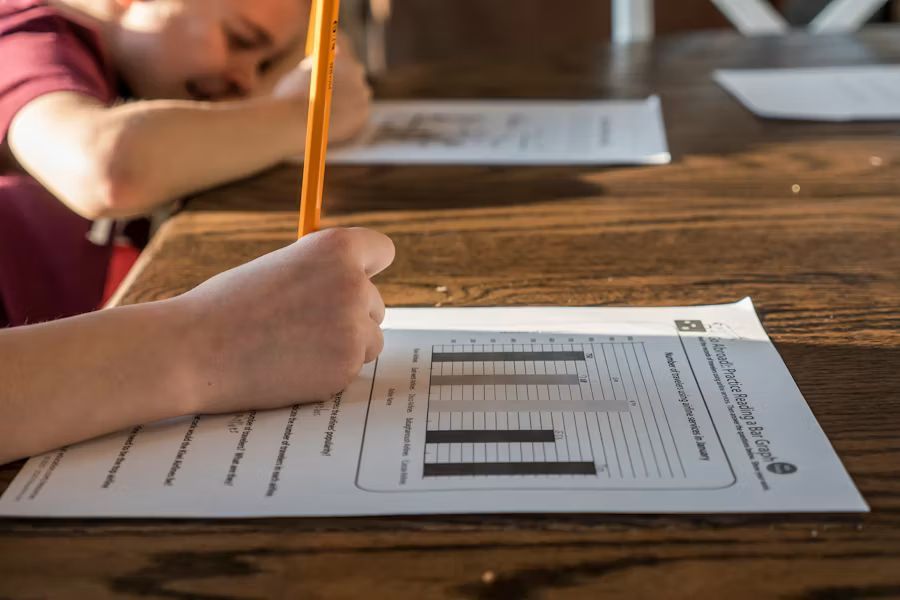
A woman is sitting at a table writing in a notebook.


Believe in yourself.

  • Assess your current academic performance and set appropriate academic goals.
  • Make a commitment to your goals by creating a dream board and displaying it on your mirror.


Get organised.

  • Set up a study schedule/timetable and keep to it.
  • You should study in a well-equipped area (proper desk and chair) with sufficient light and ventilation.
  • Avoid distractions, such as smartphones, tablets, computers, computer games, game consoles and TV.
  • Ensure that your workbooks for each subject is as neat (as possible), organised, dated and up to date. Do not fall behind. File all extra   notes, papers and memo’s immediately by pasting them into your workbook.


Drafting a schedule/timetable. It is important to allocate time for:

  • Homework time
  • Study breaks - Rule of thumb is a break of 10 – 15 minutes after each 45-minute study session. However, everyone has a different attention span. Do not use this as an excuse to procrastinate.
  • Preparation for June and November exams. Yes, you must start now! Do not “cram” – you will probably soon forget the content. Your goal . should be to study for long term memory effect throughout the year.
  • Allocate time for relaxation, family and friends.

Preparation for ANY subject includes:
  • Completing your homework, yourself. If possible, try to mark it before you go to class. This way you already know what to ask the teacher.
  • Do complete corrections during class discussions. Albert Einstein (is broadly credited to have) exclaimed: “The definition of insanity is doing the same thing over and over again but expecting different results”. Learn from your mistakes.
  • If you are still confused, make sure to visit the teacher during compulsory homework. Then try it on your own, until you are proficient.  
  • Studying is not a spectator sport. To become the best, you need to partake and practice. How to get better at Math
  • If you struggle with a specific calculation, try to break it down into simpler more manageable concepts.
  • Memorize the theory, such as formulas, theorems, properties, definitions, proves, rules, sketches etc. You should know all of these by heart. If you struggle to remember these, try to connect the new unfamiliar concept to something that is already familiar to you, for example a rhyme, a parody or sketch.
  • When revising/preparing for exams and tests, return to worked examples and activities in your workbook. Practise these before you move on to past papers.
  • Practice past papers. Not one or two, but as many as you can lay your hands on!! Use a search engine, such as Google to download past papers. If you can only find a few past papers, practice these until you are completely proficient in the calculations and time management.
  • Humans are complex. Memory includes visual, auditory and tactile memory. When studying you should SAY it, WRITE it and SKETCH it.
  • Practice to complete a task against a time limit to ensure that you will be able to finish in time during exams and tests.

Revise, revise, revise…

  • DO NOT rewrite the textbook.
  • Use effective tools such as mind maps, flow diagrams or mnemonic devices (memory games). You need to find a tool or tools that work for you.
  • Revise the previous day’s work before you go to class the next day.
  • You should PRACTICE and REVISE subject content on a CONTINUOUS and DAILY basis!

How to prepare for practical subjects such as CAT, IT, Drama, Visual Arts and Design?

  • PRACTICING new skills daily. You will not become proficient if you do not practice.
  • REVISE your theory by breaking it up into smaller, manageable sections and spreading it over time.
  • Pay attention to the glossary in the back of the textbook and summaries at the end of each chapter.
  • Pay attention to new trends and technology features in the daily news.
  • Practice to complete a task against a time limit to ensure that you will be able to finish in time during exams.
  • Keep to deadlines for Practical Assessment Tasks. Do not procrastinate. These need time to develop, grow on you and take shape.

The teacher cannot help you, if you are not at school!

To do your best, you must get enough sleep, eat nutritious meals and drink water . DO NOT drink caffeine laden energy drinks. It is bad for your health and your brain!

Do not work into the early hours of the morning, you will not be able to concentrate in class or perform well in tests – sleep enough.

Reward yourself between study breaks with activities you love.

Get your priorities in order – what is your dream for your future? (If you do not have a dream it is high time you get one!)

Implement the plan - do not procrastinate. Eat little bits of the elephant (a big task) by prioritising, setting goals and rewarding yourself for completing steps.


March 4, 2026
ADvTECH SCHOOLS CLAIM TOP HONOURS IN WESSA CENTENARY AWARDS
White and black chess pawns face each other on a chessboard against a blue background.
February 10, 2026
Discover how social media intensifies academic pressure among South African teens. Learn what causes comparison anxiety and how to foster healthier digital habits.
Two people work on laptops at an outdoor table; green table, trees, and buildings are in the background.
February 10, 2026
Explore how Gen Z can develop real-life skills in an era of digital saturation. Strategies for parents, educators, and youth to balance screen time with real-world growth.
Person in blue hoodie, hands covering face, seated indoors, appearing stressed.
February 6, 2026
Discover how South African high school students can identify and manage academic pressure to prevent burnout. Practical tips, signs to watch for, and expert advice.
Graduating students tossing caps in the air during a ceremony; black backdrop.
February 6, 2026
Explore career and education alternatives to university for South African Matric students in 2026. Learn about vocational training, online courses, gap years, and more.
two students walking through a school campus
December 18, 2025
Discover how school uniforms impact student self-expression and explore progressive South African schools that promote individuality over conformity.
Smiling person writing in notebook in front of chalkboard with text.
December 18, 2025
Discover how balancing freedom and structure helps teenagers develop confidence, resilience, and life skills. Learn practical strategies to support teen growth.
Five students sit on grass, talking. Building in background. Sunny day.
December 18, 2025
Discover why traditional schooling fails many students. Explore causes, alternative education models, and what changes can better serve today’s diverse learners.
A long hallway with a lot of windows and doors
By By Mignonne Gerli, Principal: Abbotts College Pretoria-East December 18, 2025
Wondering if it's time to change schools? Discover key signs, timing, and steps to help decide if switching schools is right for your child.
Person's hand holding a golden compass, outdoors, with blurred gray foliage in the background.
By Izak Stander August 25, 2025
As the preliminary and final examinations approach, both students and parents or guardians often experience heightened anxiety and stress. This guide provides practical strategies to help parents and guardians support their children through this critical phase of their academic journey. 1. Foster Effective Organization Create an environment conducive to studying by providing a quiet, well-lit study space equipped with essential stationery. Collaborate with your child to develop a structured study timetable to set clear expectations and promote disciplined preparation. Encourage the use of resources such as past question papers, which serve as valuable tools for revision and practice. 2. Maintain Daily Check-Ins Schedule regular, intentional conversations, such as during dinner, to discuss your child’s progress. Inquire about their experience with the day’s examination paper, adherence to their study schedule, and their feelings about upcoming tests. These check-ins foster open communication and allow you to gauge their emotional and academic state. 3. Minimize Distractions Help your child stay focused by keeping electronic devices like phones, tablets, and gaming consoles out of reach during study sessions. Set boundaries on screen time and social media access to prevent procrastination. While challenging, limiting Wi-Fi access during study hours can significantly enhance productivity. 4. Support Emotional Awareness Encourage your child to identify and articulate their emotions, such as anxiety, stress, or fatigue . Recognizing these feelings is the first step toward addressing them effectively. Discuss coping strategies to help them navigate emotional challenges during this period. 5. Teach Self-Regulation Techniques Guide your child in practicing self-regulation to manage stress. Techniques include: Breathing Exercises : Inhale deeply for four seconds, hold for four seconds, exhale for four seconds, and repeat. Sensory Focus : Identify five things they can see or hear to ground themselves in the moment. Tactile Stimulation : Hold a cold object to shift focus and reduce anxiety. These methods can help your child regain calm and focus during stressful moments. 6. Promote a Balanced Routine Prolonged study sessions late into the night can lead to burnout. Monitor your child’s study habits and encourage breaks to maintain balance. Plan activities such as outings with friends, a family meal, or short recreational periods with access to devices. Engaging in non-academic activities, like helping prepare dinner, can provide a refreshing change of focus. 7. Prioritize Self-Care Support your child’s well-being by ensuring they: Eat nutritious, regular meals. Get at least eight hours of sleep by limiting screen time before bed. Engage in physical activities such as walking, jogging, yoga, dancing, or gym workouts. These practices help alleviate stress and anxiety, which are common during examination periods. 8. Practice Empathy and Patience The examination period can be emotionally taxing for both students and parents. Approach your child with empathy, actively listening and offering guidance without criticism. This fosters a supportive environment, bolstering their mental health and sense of inclusion. By implementing these strategies, parents and guardians can play a pivotal role in helping their children navigate the challenges of examinations with confidence and resilience. Good luck to all the Grade 12 students with the upcoming examinations - you most certainly can do it!
Show More